Foundations for World Spirituality: Learning the Language of God (Part 3 of 5)
 By Marc Gafni
Editor’s note: The following essay is published as a white paper of the Center for World Spirituality think tank. Our Spirit’s Next Move blog is pleased to announce the paper’s availability.
The Second Stage: from Silence to Sound
The beginning of freedom is the emergence of voice. This stage is expressed both by the initial cry of the Israelite slaves that broke their silence, as well as by Moses’ arrival on the scene. “When Moses came, voice came,” writes the Zohar. Moses does what the charismatic revolutionary always does: he gives voice to the people. Indeed, biblical myth text records the beginning of redemption with the following words: “”It came to pass in the course of many days that the King of Egypt died and the children of Israel sighed by reason of the bondage and they cried out and their cry came up unto God.” The enslaved Israelites are received by the presence of God at the point when they move from the dumb silence of the slave to sound which is the beginning of speech, the characteristic of a free people. This “cry” is not an elegantly articulated protest – it is a cry as in the cry of a wolf, or the cry of an infant. It is primal, impassioned, pre-civilized, a howl of protest that makes it into the halls of heaven, heard by God himself.
For the first time the enslaved can express distress. They seek to articulate words that are not yet ready to form themselves on their lips. At this stage of moving toward freedom, we do not yet know how to tell our story. We do not know what we would do with the world if it were given over to our stewardship. We just know that we must protest.
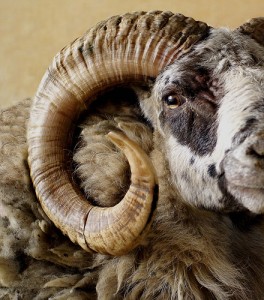
The biblical myth symbol (Leviticus 25) for the transition from slavery to freedom is the primal blast of a ram’s horn. No trumpet of gold, it is rather the rawness of the ram’s horn that captures the slave’s first fitful sounds. The first thing a revolutionary movement must do is sound its ram horn–start a newspaper, set up a radio station, build an internet site. It is not by accident that the fundamentalist and totalitarian states are trying to disallow or severely limit internet access. Freedom’s beginnings are expressed in the first shouts of protest.
The sixties and seventies were such second-stage revolutionary generations. This helps explain why so many sixties hippies became late seventies and early eighties yuppies and then transformed again into the establishment of the nineties. The feeling of distress generated protest – sound and even the first glimmerings of voice–but there was no alternative vision of society to generate “speech.” Similarly, many third world revolutionaries reflect such second stage thinking. Consequently, as we all know, that not a few third world revolutionaries became the leaders of far more repressive regimes than the ones they overthrew. Because they lacked speech to articulate the primal manifestations of voice, they needed to repress all of their own pain, the very distress and disease that initially led to the revolution.
What can they do when the revolution has happened and the dis-ease remains? Only two choices are available. The revolutionary can choose to look inside personal and societal soul in a very profound way, attempting to wrestle with the dis-ease at its source and not merely on a symptomatic level. This would involve addressing the ills of society that provoked revolution–through the creation of a new society with just laws and a conceptual framework to insure the continued freedom of the people. This is the move from primal voice to speech. Or the revolutionary can lash out to avoid the necessity of confronting his own emptiness. Lashing out is always easier but not a stage of growth. It continues and repeats the stage-two voice of protest. The repression it produces is often brutal and animalistic.
Like all stages of growth – stage two is necessary and positive when it is part of a process. Arrested growth, however, always produces some form of pathology.
The Third Stage: From Sound to Word
In the third stage, voice gives birth to word. Now we are able to tell our story – to speak authentically with each other, to articulate clearly both our needs and our visions of a better world. A rebel newspaper is no longer sufficient. Only in the writing of a constitution or a Declaration of Independence is the next stage of freedom achieved. Or in the case of the sixties, a spiritual movement needed to be born which attempts, however imperfectly, to write the books of a New Age.
Three biblical myth word symbols capture this third stage in mystical consciousness.
The first word symbol is called in Hebrew the haggadah””literally, “the story telling.” This is the very name of the myth text we read from at Pe-Sach, when we reclaim our story. By assuming authorship of our stories, we assert spiritual authority over our lives. We are no longer subject to will and directive of the taskmaster, priest, or rabbi. By becoming authors of our own haggadah, we progress past the protest and actually become free.
The master Kalonymous Kalman explains that the demarcating characteristic of messianic times is that every person will be his or her own spiritual master. This is his radical reading of the biblical myth vision expressed by prophet Jeremiah “And no man will anymore learn from his fellow to know God, for everyone will know Me from the wise to the simple.” Every person will find voice and articulate speech and those words will be his or her spiritual guide. In the end, we will discover that we are the sacred book and the sacred book is us. In fact, there is a tradition in Jewish prayer to take the Torah scrolls adorned with crowns of silver and fine cloth and carry them around the prayer room, allowing everyone to touch and kiss them. Where I pray, we started a tradition of also kissing the person chosen to carry the scrolls, recognizing that she too is a sacred scroll.
This post is part of a series of posts “Foundations for World Spirituality: Learning the Language of God” which begins with Part 1. For Part 2, Part 4, and Part 5, follow the links.

 World Spirituality Unplugged is a regular new column on this website which will feature highlights from the Center for World Spirituality’s substantial audio and video archives which are more relevant than ever before. The short clip posted here (about 5 minutes) features an excerpt from a dialogue between John Mackey and Marc Gafni, recorded in 2010 for the Future of Love Teleseries, an online event for which CWS was a co-sponsor.
 The First Stage: The Silence of Absence
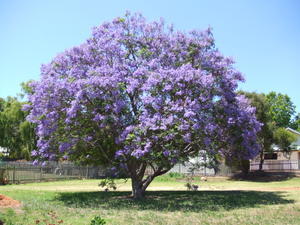 There is a tale that educators love about the girl who paints a purple tree. The teacher, who has drawn a tree on the board and asked the children to copy it, is disapproving. “You didn’t copy my tree.”
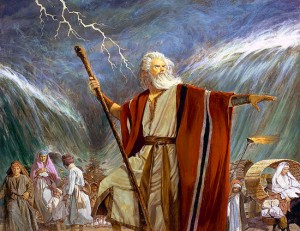 “As the Kabbalists point out, the word Moses spelled backwards is Ha Shem, meaning ‘the name.’ Importantly, Ha-shem in biblical Hebrew also is the most common reference to God’s name. When you respond to your call and realize your soul print, fully becoming your name, you become one with God. When Moses did this, he found his voice, he became a prophet.”
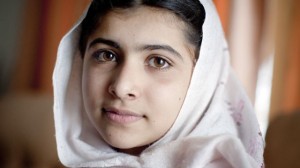 As these words are written, Malala Yousafzai is in critical condition in a hospital. The girl, now 14 years old, came to fame when the world learned she was the pseudonymous BBC blogger who advocated for girls’ education and criticized the atrocities of Islamic extremists in her city. She has been a contender for a prestigious international peace prize for children. Yesterday, on the eve of the
  In the teaching of Unique Self, the whole/part, autonomy/communion paradox is finally clarified. The Unique Self teaching allows us to create right relationship between whole and part, autonomy and communion. This right relationship is the absolute key to joy, creativity, meaning and peace.
 By Marc Gafni
 World Spirituality is not only about coping with life, but about transforming it through mystical realization.
 On MarcGafni.com, a new quote from Dr.
  In a series of books (e.g., A Sociable God, Up from Eden, and The Eye of Spirit), I have tried to show that religion itself has always performed two very important, but very different, functions. One, it acts as a way of creating meaning for the separate self: it offers myths and stories and tales and narratives and rituals and revivals that, taken together, help the separate self make sense of, and endure, the slings and arrows of outrageous fortune. This function of religion does not usually or necessarily change the level of consciousness in a person; it does not deliver radical transformation. Nor does it deliver a shattering liberation from the separate self altogether. Rather, it consoles the self, fortifies the self, defends the self, promotes the self. As long as the separate self believes the myths, performs the rituals, mouths the prayers, or embraces the dogma, then the self, it is fervently believed, will be “saved”–either now in the glory of being God-saved or Goddess-favored, or in an after-life that insures eternal wonderment.
 In
In  Remember Master Menachem Mendel who was asked by his students, “Rebbe (teacher), where is God?”
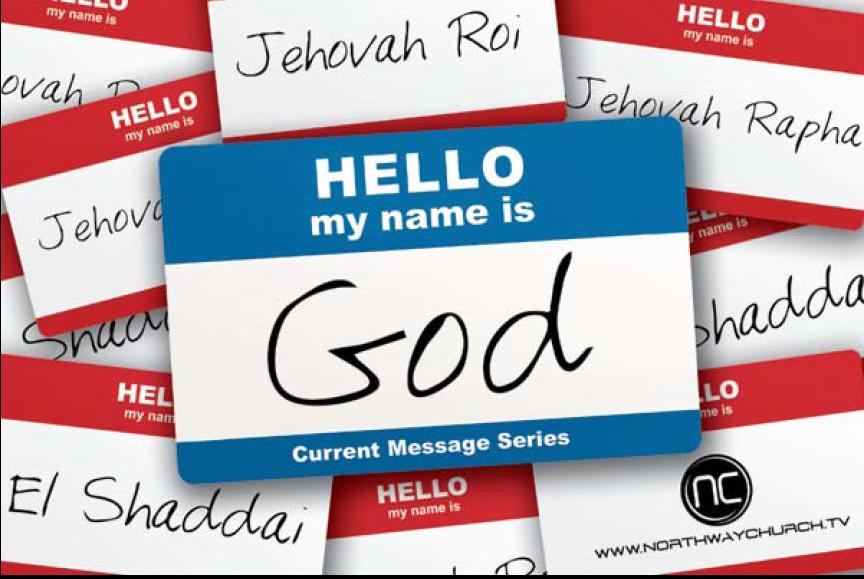 The world over, God’s name is evoked in greetings. The Spanish hello – “Olah” – originated in Arab Spain from the term “O’Allah” – Allah of course being the Arab appellation of God. In Bavarian German they say “Gruss God”. In Hebrew, the common response when asked how you are doing is “Baruch Hashem” – Praise God, or Thank God. The Hebrew greeting “Shalom” is actually a name of God. In English, we still follow this custom when we part from someone and say “God speed” or “God be with you.”