Dr. Zachary Stein: Idea Seed Banks, the “Nous Arc,” and the “Great Library”
 What do we need to give “our children” so they can prosper and grow into their highest potential—even though we don’t know what kind of challenges they will face in their lives?
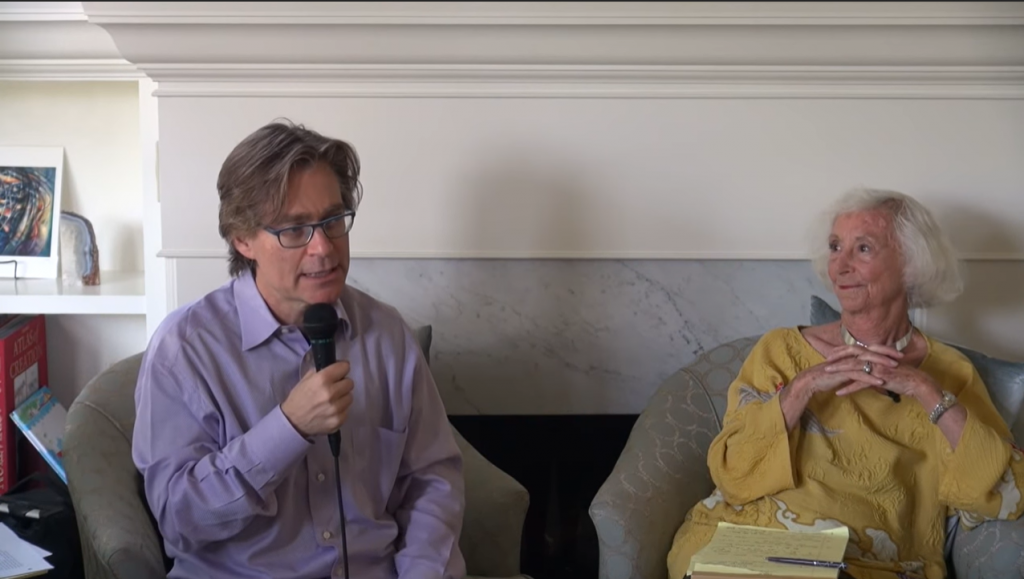
That’s the real question underlying this beautiful talk by our Academic Director Zak Stein.
Watch and listen to this fascinating thought experiment:
What would be a “seed bank” of ideas that—if preserved—would allow us to recreate civilization from the ground up, in case humanity survived some sort of an apocalypse?
Playing off of Noah’s Arc, Zak calls it the “Nous Arc.”
Engaging in this thought experiment a bunch of questions arise:
- Who gets to decide what should be in there?
- What should be the content of this “Great Library?” or in other words:
- How can we assure that we give the next generation everything they need?
The Need for Meta-Theories
In order to engage these questions, we need Meta-Theories. What are Meta-Theories?
While theories take the world as data, Meta-Theories take theories as data. Meta-Theories norm the norms of discourse.
Listen to this exciting 20-minute talk and learn:
- What a new legitimate model of teacherly authority and intergenerational transmission could be
- How our image of the ideal human looks like that we can teach into
- Why we need a theory of Cosmos and Self
- Which educational environments we need to create—in contrast to the informational environments that are stressful for most nervous systems
 One of the most dangerous problems we face in the world is extremism on behalf of belief. In many cases, extremists convince themselves that another faith or political system or individual is ‘evil’, and that they are justified in destroying them by any means necessary. We see this tendency, with tragic consequences, in the political sphere. We are now seeing it the so-called spiritual world. People who claim to be apostles of higher consciousness see no problem with trying to destroy others without due process, open dialogue, non-violent communication or the possibility of resolving differences with compassion, forgiveness and healing. Even more problematically they often hide their hidden agendas under the veneer of victim advocacy. The spiritual world is not exempt from malice. Malice, as Milan Kundera reminds us, “must never admit of itself so it must always plead other motives”.