

Common Ground: Your Unique Self: What It Means to Be a Lover … from God’s Eyes
 By Marc Gafni
Note: The following article appeared in the December 2012/January 2013 issue of Common Ground Magazine.
The true nature of your values is always revealed in death. In eulogies, both in what is spoken and unspoken, there is something of the essential nature of your life and loyalties. Sometimes, however, before you die you are strangely privileged to declare where your ultimate loyalty lies.
It was September 11, 2001. The planes had just crashed into the Twin Towers in Manhattan. Victims had moments to use their cellphones. No one called asking for revenge. No one offered philosophical explanations or profound insights into the nature of reality. People did one thing and one thing only: they called the people close to their hearts to say, “I love you.”
“I love you” is our declaration of faith. Implicit in those words is everything holy. Yet we no longer know what we mean when we say it.
It used to mean, “I am committed to you. I will live with you forever.” Or it might have meant, “You are the most important person in my life.”
But it no longer seems to mean that. And when you no longer understand your own deepest declarations of love, you are lost. You become alienated from love, which is your home. Despair, addiction, and numbness become your constant companions.
To read the entire article, download it as a PDF file.
 We long for something deeper; something more, a higher and more noble authenticity. We masquerade in the mask of our wholeness knowing all along that it is but a charade; that we are part of larger whole with whom we yearn to be re-united. A shard of a shattered vessel whose hidden sparks seek to be uplifted and absorbed into the one even as they retain their sacred separate identity. “As the gazelle yearns after the stream of clear water, so does my soul long after you, my God.”
  By
By  From
From 
 The unfolding of divine consciousness is not a purely intra-divine process. The great privilege of being a human being is that we participate in the evolution and healing of God. We are God’s healers. It is the evolution of the human spirit that catalyzes the evolution of God. When God and man meet in an evolutionary embrace redemption is achieved.

 (Silence.)
 The vulgar world is already shouting, and with such a raucous rancor that truer voices can scarcely be heard at all. The materialistic world is already full of advertisements and allure, screams of enticement and cries of commerce, wails of welcome and whoops of come hither. I don’t mean to be harsh here, and we must honor all lesser engagements. Nonetheless, you must have noticed that the word “soul” is now the hottest item in the title of book sales–but all “soul” really means, in most of these books, is simply the ego in drag. “Soul” has come to denote, in this feeding frenzy of translative grasping, not that which is timeless in you but that which most loudly thrashes around in time, and thus “care of the soul” incomprehensibly means nothing much more than focusing intensely on your ardently separate self. Likewise, “Spiritual” is on everybody’s lips, but usually all it really means is any intense egoic feeling, just as “Heart” has come to mean any sincere sentiment of the self-contraction.
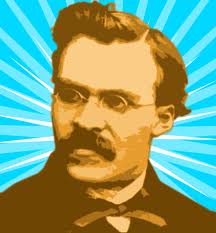 Suddenly, in the chair beside him, Nietzsche took off his spectacles, buried his face in his handkerchief, and burst into sobs.
 And therefore, all of those for whom authentic transformation has deeply unseated their souls must, I believe, wrestle with the profound moral obligation to shout from the heart–perhaps quietly and gently, with tears of reluctance; perhaps with fierce fire and angry wisdom; perhaps with slow and careful analysis; perhaps by unshakeable public example–but authenticity always carries a demand and duty: you must speak out, to the best of your ability, and shake the spiritual tree, and shine your headlights into the eyes of the complacement. You must let that radical realization rumble through your veins and rattle those around you.