
Daily Wisdom: Authentic spirituality starts elitist and ends up egalitarian
From Ken Wilber’s “A Spirituality That Transforms”:
And so, even as we rightly criticize merely translative religion (and all the lesser forms of transformation), let us also realize that an integral approach to spirituality combines the best of horizontal and vertical, translative and transformative, legitimate and authentic–and thus let us focus our efforts on a balanced and sane overview of the human condition.
But isn’t this view of mine terribly elitist? Good heavens, I hope so. When you go to a basketball game, do you want to see me or Michael Jordan play basketball? When you listen to pop music, who are you willing to pay money in order to hear? Me or Bruce Springsteen? When you read great literature, who would you rather spend an evening reading, me or Tolstsoy? When you pay sixty-four million dollars for a painting, will that be a painting by me or by Van Gogh?
All excellence is elitist. And that includes spiritual excellence as well. But spiritual excellence is an elitism to which all are invited. We go first to the great masters–to Padmasambhava, to St. Teresa of Avila, to Gautama Buddha, to Lady Tsogyal, to Emerson, Eckhart, Maimonides, Shankara, Sri Ramana Maharshi, Bodhidarma, Garab Dorje. But their message is always the same: let this consciousness be in you which is in me. You start elitist, always; you end up egalitarian, always.
But in between, there is the angry wisdom that shouts from the heart: we must, all of us, keep our eye on the radical and ultimate transformative goal. And so any sort of integral or authentic spirituality will also, always, involve a critical, intense, and occasionally polemical shout from the transformative camp to the merely translative camp.
 And so, even as we rightly criticize merely translative religion (and all the lesser forms of transformation), let us also realize that an integral approach to spirituality combines the best of horizontal and vertical, translative and transformative, legitimate and authentic–and thus let us focus our efforts on a balanced and sane overview of the human condition.
Read the whole piece…


 A line, circle, shadow story from the depths of Hebrew mysticism.
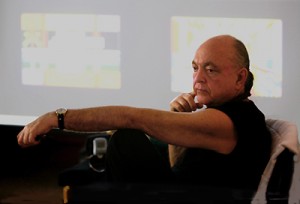 [Chogyam] Trungpa [Rinpoche] had to introduce translative and lesser practices in order to prepare people for the obviousness of what is.


 Whereas translative religion offers legitimacy, transformative religion offers authenticity. For those few individuals who are ready–that is, sick with the suffering of the separate self, and no longer able to embrace the legitimate worldview–then a transformative opening to true authenticity, true enlightenment, true liberation, calls more and more insistently. And, depending upon your capacity for suffering, you will sooner or later answer the call of authenticity, of transformation, of liberation on the lost horizon of infinity.

 What’s the path of third person? The path of third person is the path of wonder, utter and absolute wonder in which I engage not in a human face-to-face relationship, not in a dialogue. Not in a place in which there’s a conversation that takes place. It’s about the path of awe and wonder where I step back and I allow myself to be overwhelmed by the full and infinite wonder, texture, beauty, complexity, infinity of All-That-Is.
 One of the key values a couple must share in the biblical myth vision is a commitment to make the world a better place. They must be lovers not only to each other but to the world. This means that they are committed to looking beneath the surface of reality to search for the sparks of the sacred that can be hidden in the most unlikely of places. This is the commitment to love as perception: to find the good – the God points – hidden behind the obfuscating veils of an often painful reality. They are committed to healing and repairing the world even as they understand that they are not in control.
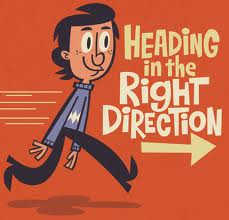 A life well lived does not mean a life without mistakes. It means making mistakes in the right direction. A famous Talmudic passage re-read by my teacher Mordechai Lainer of Izbica says roughly as follows “One cannot follow the direction of one’s life until one first fails in pursuing that very direction.” Or in another passage, the Talmud itself writes, “The wicked falls once and does not rise, the Master falls seven times and rises each time again”.
 By deploying intellectual, meditative and mystical faculties, the lover of divine text moves to unpack the fresh invitation of the divine voice. The divine voice speaks presently to the individual and the community in the eternal now.
 But, we ask, what will happen to our drive for progress if we see all opposites are one? Well, with any luck, it will stop–and with it that peculiar discontent that thrives on the illusion that the grass is always greener on the other side of the fence. But we should be clear about this. I do not mean that we will cease making advancements of a sort in medicine, agriculture, and technology. We will only cease to harbor the illusion that happiness depends on it. For when we see through the illusions of our boundaries, we will see, here and now, the universe as Adam saw it before the Fall: an organic unity, a harmony of opposites, a melody of positive and negative, delight with the play of our vibratory existence. When the opposites are realized to be one, discord melts into concord, battles become dances, and old enemies become lovers. We are then in a position to make friends with all of our universe, and not just one half of it.
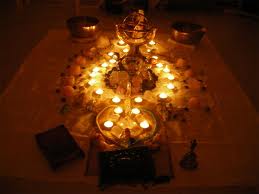 Of course, to remind another of their full beauty you have to be fully aware of your own. The Baal Shem Tov has a wonderful teaching on the biblical mandate “love your neighbor as you love yourself.” First it is a statement of fact–you love your neighbor precisely as much as you love yourself. For in the end, you can only perceive another’s greatness if you have glimpsed and believe in your own. Self-love is self-perception.