
World Spirituality Unplugged: From Jerusalem to Tibet with Love: Marc Gafni and Dalai Lama in 2008
Marc Gafni (from his 2008 dialogue with the Dalai Lama):
To love someone is to see them with God’s eyes, to perceive them at their highest place, like — as His Holiness said — the mother who sees the baby. The mother, no matter what the baby does when older, always sees the baby as divine. Therefore we call God in Hebrew mysticism, Kabbalah, the divine breast of the Mother who feeds us all.
So we are all, like God, trying to see Other with God’s eyes. So to love is to see with God’s eyes, not an emotion, but a perception. … That’s our basic idea. So we say we can train people to love. Because if love is an emotion, we can’t train an emotion. But we can train a perception. We can train people to see.
So good Hebrew teaching is to train people to see… and to give… The Hebrew word for “love” also means “to give” and “ecstasy”… Ecstatic emotion that comes from giving. In Hebrew tradition, I first give, and if I give, I love. That’s just a gentle wisdom from Jerusalem to Tibet. Thank you so much for your wisdom on loving…
Note: This post originally appeared on Marc Gafni’s Tumblr page.
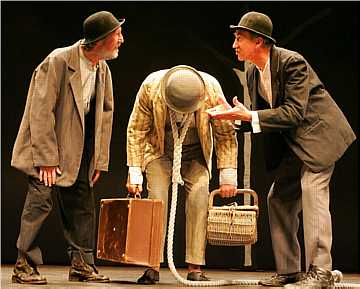
 Only someone who chooses to step into her story can find voice and respond to her call.
 Join us for a new free event, “Unique Self and Creating your Life on Purpose”! On Thursday, Dec 6 at 6pm PT (9pm PT) Marc Gafni with be joined by Anodea Judith, author of Creating on Purpose, for a spirited discussion about the ideas contained in both their new books.
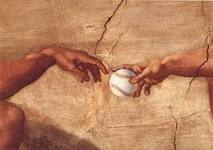 There were once two best friends who loved baseball. Their great theological question in life was whether there is baseball in heaven. So they make a pact that whoever passes away first will come back and tell the other whether there is baseball in heaven! Well, one passed away and sure enough, true to their pact, appears to his friend in a dream several days later.
 The human self understanding as “King,” stems from the insight, fruit of all serious spiritual practice, that all of reality is included in the divine. Once one realizes that all is the Godhead then one may draw one of two conclusions. First, one might say, well if all is God then I must immediately nullify and surrender to God. And that is good. However one might also say – if all is God, then I am God as well. And that is much better. For the first realization produces what Jewish, Christian and Eastern mystics have called Via Passiva. It’s a passivism, even a kind of resignation which results from the realization that human action is but illusion and the only will which is real is the will of God.
 On December 4 at 9 a.m. PT,
 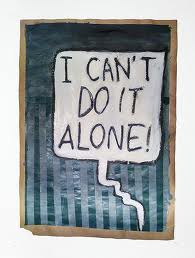 In the image of the Temple, we are told of the priest who hears the voice of God, praying. To whom could God be praying? The answer — to us. “Please,” says the Voice. “I cannot do it alone. Please help me…”
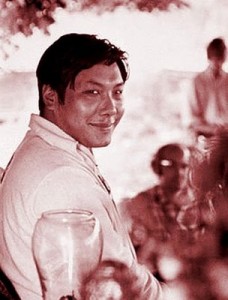 When Chogyam Trungpa Rinpoche, a great (though controversial) Tibetan master, first came to this country, he was renown for always saying, when asked the meaning of Vajrayana, “There is only Ati.” In other words, there is only the enlightened mind wherever you look. The ego, samsara, maya and illusion — all of them do not have to be gotten rid of, because none of them actually exist: There is only Ati, there is only Spirit, there is only God, there is only nondual Consciousness anywhere in existence.
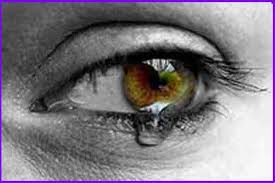 Tears or their absence in every culture across time are considered the signposts of spirit glimmerings of eternity and whisperings of divinity. Tears are the divine whisper which utters the secret of our destiny in a tear drop. Heinrich Heine cries out in ecstatic rapture, “What poetry there is in tears;” Hebrew Wisdom would add, “What Wisdom there is in tears.”
 Unique Self mystics in the old Aramaic texts spoke of two paths, itcafya and ithapcha.
 The rapist, the corporate raider, the Don Juan, and the conqueror are always taking. The sad result is that they never give and therefore never receive. Therefore, the more they take, the less they have. As a result they always remain empty. For many of the biblical mystics, the symbol of conquest was Alexander the Great. He took almost the entire known world of his day. Yet, insisted the masters, without becoming a lover, Alexander would necessarily remain empty.
 According to Hayyim Vital, the premier student and mystical partner to Isaac Luria, leader of the great renaissance school of Kabbalah in Safed: