
CWS supports International Day of the Girl
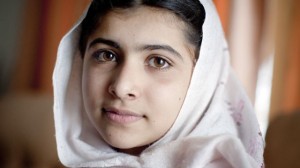 As these words are written, Malala Yousafzai is in critical condition in a hospital. The girl, now 14 years old, came to fame when the world learned she was the pseudonymous BBC blogger who advocated for girls’ education and criticized the atrocities of Islamic extremists in her city. She has been a contender for a prestigious international peace prize for children. Yesterday, on the eve of the International Day of the Girl, she was shot in the head and neck.
The world is outraged at the Taliban’s act of terror which is described like so by the Christian Science Monitor:
“Which one of you is Malala? Speak up, otherwise I will shoot you all,” a hooded, bearded Taliban militant asked a bus full of schoolgirls on their way home earlier this week. “She is propagating against the soldiers of Allah, the Taliban. She must be punished,” the Taliban militant shouted louder. Then, recognizing her, he shot her at a point blank range.
We pray for Malala’s recovery and honor her courage and contribution to peace and the rights of girls. Let us keep the 14-year-old girl, truly a world leader, in our thoughts and prayers. Taliban officials claimed responsibility for an attack on her which leaves her in critical condition at this time, citing her work on behalf of education for girls as an “obscenity.” Let us keep them in our prayers as well, praying that fundamentalist extremists everywhere would wake up and grow up!
The struggle for girls’ rights is one face of Spirit’s next move, and we are all called to love and compassion to aid them. It is fitting on this day that the leadership team of the Center for World Spirituality expresses our support for the International Day of the Girl, a new day for working to make the world a better place for girls everywhere.
Together with many other organizations and cities in nearly 100 countries around the world, we proclaim our support. We announce:
WHEREAS, the Center for World Spirituality is a leading voice in the emergence of a global spirituality based on the best ethical insights of the wisdom traditions of pre-modern, modern, and postmodern cultures;
and WHEREAS, the Center for World Spirituality recognizes that every girl is no less than the personal face of essence, God having a You-as-a-girl experience;
and WHEREAS, the United Nations established October 11 as the annual International Day of the Girl Child supported and co-sponsored by 98 countries;
and WHEREAS, The “Day of the Girl” campaign calls on communities across the globe to recognize that girls worldwide face many injustices such as discrimination, gender stereotypes, child marriage and lack of education; and empowers girls to fight for their rights;
and WHEREAS, the Center for World Spirituality supports the goals of other organizations participating in the “Day of the Girl” campaign including increasing girls’ participation in sports, science and math-related activities, high school graduation rate, and providing equal opportunities for all girls by speaking out against gender-based injustices, celebrating all girls’ potential, and encouraging all girls to pursue their dreams;
and THEREFORE BE IT PROCLAIMED that We, the Leadership Team at Center for World Spirituality, hereby do proclaim October 11, 2012 as the Day of the Girl throughout our organization across the world.
God bless Malala Yousafzai and girls everywhere.
The CWS Leadership Team
 In the teaching of Unique Self, the whole/part, autonomy/communion paradox is finally clarified. The Unique Self teaching allows us to create right relationship between whole and part, autonomy and communion. This right relationship is the absolute key to joy, creativity, meaning and peace.
 By Marc Gafni
 World Spirituality is not only about coping with life, but about transforming it through mystical realization.
 On MarcGafni.com, a new quote from Dr.
  In a series of books (e.g., A Sociable God, Up from Eden, and The Eye of Spirit), I have tried to show that religion itself has always performed two very important, but very different, functions. One, it acts as a way of creating meaning for the separate self: it offers myths and stories and tales and narratives and rituals and revivals that, taken together, help the separate self make sense of, and endure, the slings and arrows of outrageous fortune. This function of religion does not usually or necessarily change the level of consciousness in a person; it does not deliver radical transformation. Nor does it deliver a shattering liberation from the separate self altogether. Rather, it consoles the self, fortifies the self, defends the self, promotes the self. As long as the separate self believes the myths, performs the rituals, mouths the prayers, or embraces the dogma, then the self, it is fervently believed, will be “saved”–either now in the glory of being God-saved or Goddess-favored, or in an after-life that insures eternal wonderment.
 In
In  Remember Master Menachem Mendel who was asked by his students, “Rebbe (teacher), where is God?”
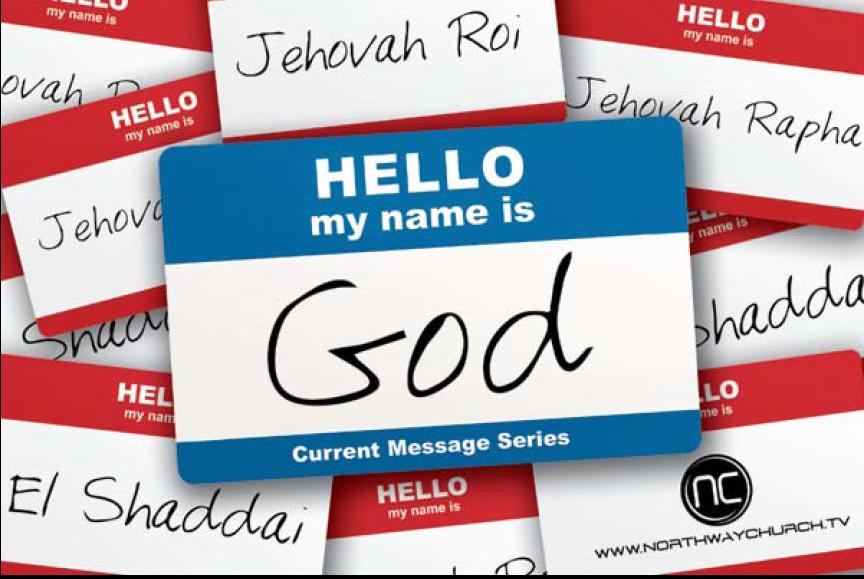 The world over, God’s name is evoked in greetings. The Spanish hello – “Olah” – originated in Arab Spain from the term “O’Allah” – Allah of course being the Arab appellation of God. In Bavarian German they say “Gruss God”. In Hebrew, the common response when asked how you are doing is “Baruch Hashem” – Praise God, or Thank God. The Hebrew greeting “Shalom” is actually a name of God. In English, we still follow this custom when we part from someone and say “God speed” or “God be with you.”
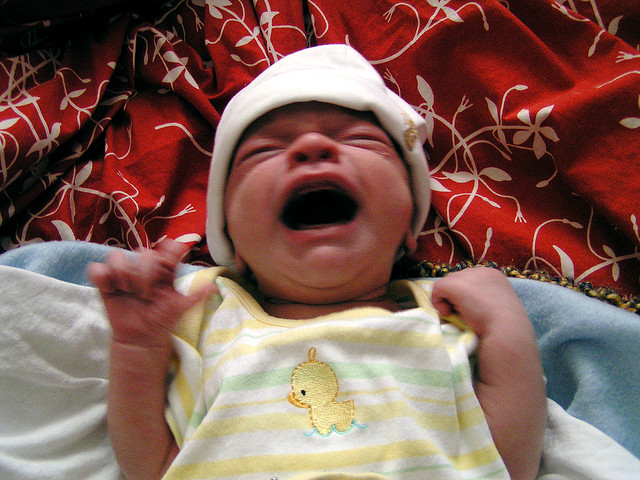 God responds to the crying of Ishmael and not the crying of Hagar. Ishmael represents the crying of the baby with which all life begins. Why does the baby cry? The baby is hungry, the baby is afraid, the baby is vulnerable, the baby is lonely. The baby’s cry is a primal scream of protest. The shofar on Rosh Hashana is called by the talmud “Yeulelei Yallil,” the howling of the wolf. It is a kind of intuitive shriek, a pre-personal crying expressing a feeling of threat and a deep need for protection. It is motivated at least in part by fear.
 In order to identify our unique selves (in theistic terms – soul prints) and to respond to the voices that call us to meaning we need to first experience the world as meaningful. One of the great cries of modernity is that it all seems to be a house of mirrors. The image of the house of mirrors indicates our feeling that there is no core essence in the world; rather all is a grand joke, an illusion, a house of mirrors in a cruel carnival. Life too often seems absurd. Nothing really matters. Absurdus’ means “fully deaf” in Latin. So often we moderns, strain mightily and often vainly, to hear the call or sense the innate purpose of being.
 So far, the two major qualities of the erotic lover have been perception and giving. We have seen how the sexual models the erotic, hinting to us how we can live a deeper, more profound existence in all areas of our lives. In order to give in the realm of the sexual, we must be great listeners – fully attentive to the subtlest nuances of our lover’s desire. Similarly, to be a giver in all arenas of being requires our mastering the lover’s art of attention.
 Love doesn’t just sit there, like a stone, it has to be made, like bread; remade all the time, made new. ”” Ursula K. LeGuin, The Lathe of Heaven
 To be a lover is to be a giver. It is through the consistent commitment to the growth of the other expressed through regular and spontaneous acts of giving that you become a lover.
 The perception of falling in love is but one expression, however of a broader kind, of perception. This higher way of seeing is the path of Ecstasy. Ecstasy, from the Greek word ex-stasis, means “to move beyond stasis,” that is “beyond the apparently solid, into motion, movement, and life itself.” Its Latin root ex-stare means to stand outside yourself. To say I’m ecstatic is to say “I am beside myself. I am overwhelmed by intense experience. The veils of my illusions have been pierced and something essential touched.”
 Love is almost always proceeded by an act of will. We do not fall in love unless we decide to fall in love. Only after we internally give ourselves permission are we open to the experience. But once we open the gate, the radically pleasurable perception of falling in love, and the joy and wonder created in its wake, are given to us free of all charges. The Kabbalists refer to falling in love as “arousal from above.” The love granted to us is real enough; it is simply not the result of human effort. It is something which is aroused from beyond.