

Daily Wisdom: The Crying of Union
 We begin with longing. We give expression to that yearning in tears. Ultimately, the promise of divinity is that the crying of longing will become the crying of union. The transformation of the crying of longing, to the crying of union is part of the Tikkun, the ”˜fixing’ of tears. And this is the very process of redemption itself.
Even those who cannot cry however can find their yearning. There is a story of some Chassidim who, in the presence of the Rebbe, were dancing and singing before God, all in great devekut, in great cleaving. And they were all crying holy tears. There was one among them, however who could not cry. He felt so terrible about this that he ran and got some onions, which he held to his eyes so he too could cry. The master, seeing this, praised his action, saying that it was very precious to God that he wanted to cry. Very often we desperately want to cry but have forgotten the language of tears. We need to be reminded that to long to cry is sometimes as precious as the cry itself.
Dr. Marc Gafni
from: The Dance of Tears
(in press)

 And so, even as we rightly criticize merely translative religion (and all the lesser forms of transformation), let us also realize that an integral approach to spirituality combines the best of horizontal and vertical, translative and transformative, legitimate and authentic–and thus let us focus our efforts on a balanced and sane overview of the human condition.

 A line, circle, shadow story from the depths of Hebrew mysticism.
 [Chogyam] Trungpa [Rinpoche] had to introduce translative and lesser practices in order to prepare people for the obviousness of what is.


 Whereas translative religion offers legitimacy, transformative religion offers authenticity. For those few individuals who are ready–that is, sick with the suffering of the separate self, and no longer able to embrace the legitimate worldview–then a transformative opening to true authenticity, true enlightenment, true liberation, calls more and more insistently. And, depending upon your capacity for suffering, you will sooner or later answer the call of authenticity, of transformation, of liberation on the lost horizon of infinity.

 What’s the path of third person? The path of third person is the path of wonder, utter and absolute wonder in which I engage not in a human face-to-face relationship, not in a dialogue. Not in a place in which there’s a conversation that takes place. It’s about the path of awe and wonder where I step back and I allow myself to be overwhelmed by the full and infinite wonder, texture, beauty, complexity, infinity of All-That-Is.
 One of the key values a couple must share in the biblical myth vision is a commitment to make the world a better place. They must be lovers not only to each other but to the world. This means that they are committed to looking beneath the surface of reality to search for the sparks of the sacred that can be hidden in the most unlikely of places. This is the commitment to love as perception: to find the good – the God points – hidden behind the obfuscating veils of an often painful reality. They are committed to healing and repairing the world even as they understand that they are not in control.
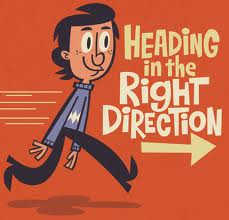 A life well lived does not mean a life without mistakes. It means making mistakes in the right direction. A famous Talmudic passage re-read by my teacher Mordechai Lainer of Izbica says roughly as follows “One cannot follow the direction of one’s life until one first fails in pursuing that very direction.” Or in another passage, the Talmud itself writes, “The wicked falls once and does not rise, the Master falls seven times and rises each time again”.
 By deploying intellectual, meditative and mystical faculties, the lover of divine text moves to unpack the fresh invitation of the divine voice. The divine voice speaks presently to the individual and the community in the eternal now.
 But, we ask, what will happen to our drive for progress if we see all opposites are one? Well, with any luck, it will stop–and with it that peculiar discontent that thrives on the illusion that the grass is always greener on the other side of the fence. But we should be clear about this. I do not mean that we will cease making advancements of a sort in medicine, agriculture, and technology. We will only cease to harbor the illusion that happiness depends on it. For when we see through the illusions of our boundaries, we will see, here and now, the universe as Adam saw it before the Fall: an organic unity, a harmony of opposites, a melody of positive and negative, delight with the play of our vibratory existence. When the opposites are realized to be one, discord melts into concord, battles become dances, and old enemies become lovers. We are then in a position to make friends with all of our universe, and not just one half of it.