
Daily Wisdom: Spiritual realization carries a terrible burden: an obligation to communicate
from “A Spirituality That Transforms”:
And therefore, all of those for whom authentic transformation has deeply unseated their souls must, I believe, wrestle with the profound moral obligation to shout from the heart–perhaps quietly and gently, with tears of reluctance; perhaps with fierce fire and angry wisdom; perhaps with slow and careful analysis; perhaps by unshakeable public example–but authenticity always carries a demand and duty: you must speak out, to the best of your ability, and shake the spiritual tree, and shine your headlights into the eyes of the complacement. You must let that radical realization rumble through your veins and rattle those around you.
Alas, if you fail to do so, you are betraying your own authenticity. You are hiding your true estate. You don’t want to upset others because you don’t want to upset your self. You are acting in bad faith, the taste of bad infinity.
Because, you see, the alarming fact is that any realization of depth carries a terrible burden: Those who are allowed to see are simultaneously saddled with the obligation to communicate that vision in no uncertain terms: that is the bargain. You were allowed to see the truth under the agreement that you would communicate it to others (that is the ultimate meaning of the bodhisattva vow). And therefore, if you have seen, you simply must speak out. Speak out with compassion, or speak out with angry wisdom, or speak out with skillful means, but speak out you must.
 And therefore, all of those for whom authentic transformation has deeply unseated their souls must, I believe, wrestle with the profound moral obligation to shout from the heart–perhaps quietly and gently, with tears of reluctance; perhaps with fierce fire and angry wisdom; perhaps with slow and careful analysis; perhaps by unshakeable public example–but authenticity always carries a demand and duty: you must speak out, to the best of your ability, and shake the spiritual tree, and shine your headlights into the eyes of the complacement. You must let that radical realization rumble through your veins and rattle those around you.
Read the entire article…




 And so, even as we rightly criticize merely translative religion (and all the lesser forms of transformation), let us also realize that an integral approach to spirituality combines the best of horizontal and vertical, translative and transformative, legitimate and authentic–and thus let us focus our efforts on a balanced and sane overview of the human condition.

 A line, circle, shadow story from the depths of Hebrew mysticism.
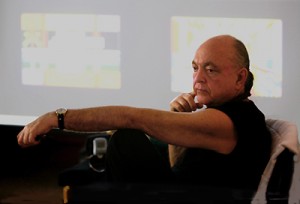 [Chogyam] Trungpa [Rinpoche] had to introduce translative and lesser practices in order to prepare people for the obviousness of what is.

 Whereas translative religion offers legitimacy, transformative religion offers authenticity. For those few individuals who are ready–that is, sick with the suffering of the separate self, and no longer able to embrace the legitimate worldview–then a transformative opening to true authenticity, true enlightenment, true liberation, calls more and more insistently. And, depending upon your capacity for suffering, you will sooner or later answer the call of authenticity, of transformation, of liberation on the lost horizon of infinity.

 What’s the path of third person? The path of third person is the path of wonder, utter and absolute wonder in which I engage not in a human face-to-face relationship, not in a dialogue. Not in a place in which there’s a conversation that takes place. It’s about the path of awe and wonder where I step back and I allow myself to be overwhelmed by the full and infinite wonder, texture, beauty, complexity, infinity of All-That-Is.
 One of the key values a couple must share in the biblical myth vision is a commitment to make the world a better place. They must be lovers not only to each other but to the world. This means that they are committed to looking beneath the surface of reality to search for the sparks of the sacred that can be hidden in the most unlikely of places. This is the commitment to love as perception: to find the good – the God points – hidden behind the obfuscating veils of an often painful reality. They are committed to healing and repairing the world even as they understand that they are not in control.
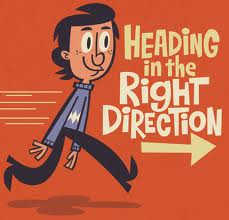 A life well lived does not mean a life without mistakes. It means making mistakes in the right direction. A famous Talmudic passage re-read by my teacher Mordechai Lainer of Izbica says roughly as follows “One cannot follow the direction of one’s life until one first fails in pursuing that very direction.” Or in another passage, the Talmud itself writes, “The wicked falls once and does not rise, the Master falls seven times and rises each time again”.